
In fiscal year 2026, 58% of New York City EMTs who left their title did not leave the Fire Department at all. They became firefighters.
A report released October 16, 2026, by City Comptroller Mark Levine shows why that move makes financial sense.
An FDNY EMT earns $68,700 after about five and a half years, while a firefighter with similar service earns $105,146.
A $36,446 gap is the kind of difference that turns a career question into a family meeting, and probably a spreadsheet.
What the Comptroller Report Found
The report, titled A System Under Strain, follows the FDNY Emergency Medical Service from FY 2015 through FY 2026. City fiscal years end June 30, so the newest figures run through June 2026. The retention numbers from this report are the part that jumped out at me:
- EMT attrition reached 19.5% in FY 2026, with more than 500 departures.
- From FY 2019 through FY 2026, EMTs left their title at an average rate of 15.4% a year, compared with 6.6% for firefighters.
- About 4,300 EMTs and paramedics left their titles over those eight years.
- Median time in title in June 2026 was 3.8 years for EMTs and 8.1 years for firefighters.
The Pay Gap Measured in Paychecks
All three jobs below belong to the same department, and two of them often respond to the same medical emergency. The difference shows up over time rather than on day one.
| FDNY title | Starting base pay | After about 5.5 years | Growth |
|---|---|---|---|
| EMT | $43,932 | $68,700 | 56% |
| Paramedic | $58,088 | $86,348 | 49% |
| Firefighter | $54,122 | $105,146 | 94% |
Source: NYC Comptroller, A System Under Strain. Figures represent reported base salary levels and growth.
Percentages hide what a worker actually notices, so I converted the five-year gap into pay periods. The $36,446 difference between an EMT and a firefighter works out to about $3,037 a month before taxes, or roughly $1,402 per biweekly paycheck.
A new firefighter starts only $10,190 ahead. Paramedics, who need far more training than EMTs, still trail firefighters by $18,798 at the five-year mark. The starting EMT and paramedic figures match the ranges FDNY posts on its EMS recruitment page.
Firefighter Is Officially a Promotion for EMTs
The switch is not a resignation followed by a fresh application. New York City runs a civil service exam called Promotion to Firefighter, and permanent EMTs and paramedics are among the FDNY titles allowed to take it.
Under the notice for Promotion to Firefighter Exam No. 4528, eligible employees needed at least four years of permanent service in their current title before promotion, plus passing scores on a computer-based test and a pass/fail physical ability test.
Put that four-year requirement next to the 3.8-year median EMT tenure and the timing lines up closely.
Tenure data alone cannot show how many EMTs plan their exit around that clock, and the notice says the EMS eligibility rules applied to that exam only.
Still, the ladder exists, the department advertises it to EMTs, and the pay at the top of it beats anything on the ambulance side.

A Job Title Problem
When two roles share an employer, and sometimes the same emergency, workers compare them constantly, whatever the org chart says.
EMTs and firefighters both work for FDNY, and both show up at cardiac arrests.
FDNY marked 30 years since New York City’s emergency medical services became part of the Fire Department. In this video, the department looks back at the merger and the development of its emergency medical system.
The comptroller adds that FDNY EMS staff also earn less than their private-sector counterparts.
Whenever someone quotes an average salary, we would still ask which version of the job they mean, and usually that question is about two different companies.
Here both versions sit inside one department. For an EMT with four years in, the internal transfer is the easiest large raise in the building.
What the Turnover Costs the City
Losing EMTs to the firehouse keeps those workers in city service, but somebody still has to staff the ambulances. The report tracks the bill for that.
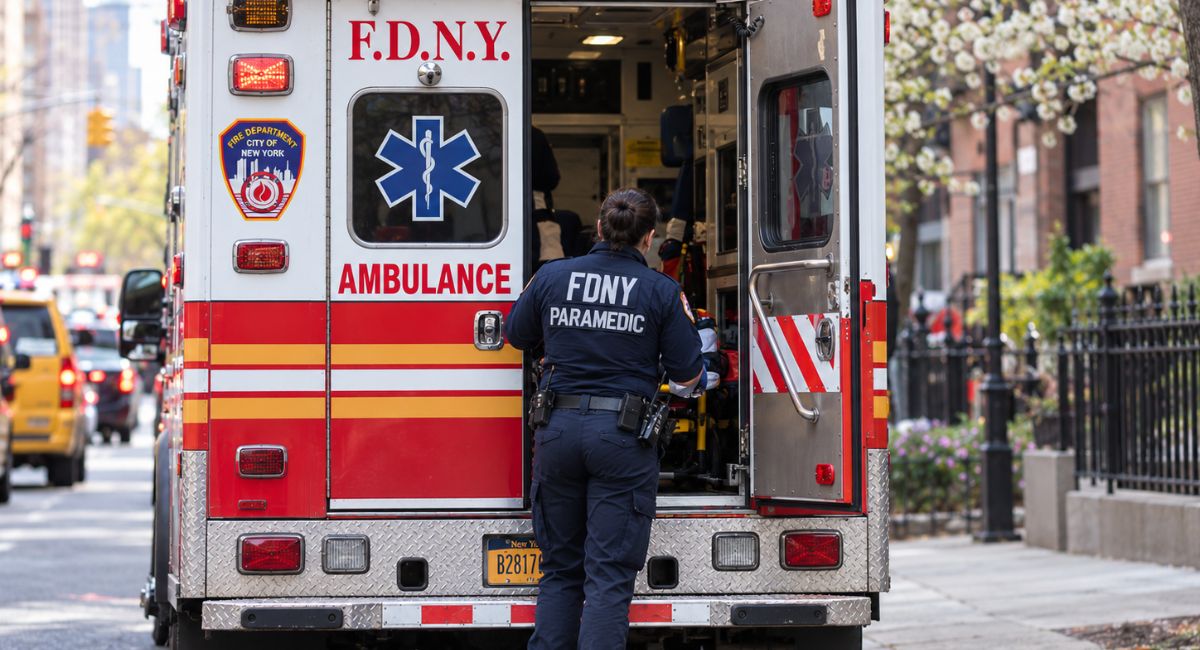
- EMS overtime rose 102%, from $34.5 million in FY 2015 to $69.6 million in FY 2026.
- Training spending for new EMTs climbed from $15 million to more than $62 million.
- The FDNY commissioner estimated training costs at $41,000 per EMT and $130,000 per paramedic.
Our own rough estimate uses only figures from the report. More than 500 EMTs left their title in FY 2026, and 58% of them became firefighters, so at least 290 moved to the fire side. At $41,000 each, replacing them implies roughly $11.9 million in EMT training for one year of transfers. Treat that as an approximation, not a published number.
Why a Fire Truck Shows Up When You Call for an Ambulance
That requirement answers a question people keep asking online, namely why an engine pulls up for a medical call. In FY 2026, life-threatening medical incidents made up 53.4% of fire company responses, up from 48.3% in FY 2015. Average response time to life-threatening medical calls, measured from the call to arrival, grew by 3 minutes and 50 seconds, or 41.2%, over the same period. Response times for calls that were not life-threatening more than doubled.
The widely shared 41% figure covers life-threatening calls specifically. As an average, it also hides patients who waited far longer and others who waited far less.
How FDNY EMT Pay Compares With the Rest of the Country
The Bureau of Labor Statistics occupational outlook puts the national median wage for EMTs at $44,470 as of May 2025, and $60,600 for paramedics. An FDNY EMT starts at $43,932, slightly below the national median, while working in one of the most expensive housing markets in the country.

A New York EMT faces a hard version of a familiar problem, with roughly average pay in a city where average pay does not stretch far. Big-city wage premiums are real in many fields, as the gap between San Francisco and Miami hourly wages shows, but FDNY EMS starting pay barely reflects one. Inside the department, the firefighter scale is the only big-city premium on offer.
Would Pay Parity Fix the Problem
Nothing has been approved yet. Local 2507, the union for FDNY EMTs and paramedics, has worked without an active contract since July 29, 2022, and the city is negotiating with EMS unions.
The 2021 Local 2507 agreement raised starting EMT pay from $35,254 to $39,386. The comptroller priced two possible paths.
The debate over FDNY EMS pay has drawn growing attention as staffing shortages and ambulance response delays continue to affect New York City. In this FOX 5 News segment, the focus is on calls for fairer compensation and the challenges emergency medical workers face while responding to the city’s medical emergencies.
View this post on Instagram
| Pay scenario | Added net cost in FY 2027 | Cumulative net cost |
|---|---|---|
| Parity with firefighters | $289 million | $1.23 billion (FY 2023 through FY 2027) |
| Voluntary hospital pay benchmark | $98 million | $352 million (contract period) |
Source: NYC Comptroller projections. These are modeled costs, not approved budget allocations.
Both rows are comptroller projections, not budget decisions. The report also cautions that pay parity alone is unlikely to substantially lower response times, though better retention could ease pressure on crews. For context, private-sector hourly pay nationally was up 3.1% from a year earlier in August 2026.
What to Watch Next
The number we will watch first is not a response time. It is the wage scale in whatever contract Local 2507 and City Hall eventually sign.
If the deal closes a meaningful share of the $36,446 gap, FY 2027 attrition data should show fewer EMTs taking the promotional route.
If the gap stays near where it is, we expect the 58% share to hold, because the math behind it will not change.
EMTs weighing the move can run that math themselves by putting both FDNY pay scales side by side and adding four years. The physical test and the job itself still decide the rest.